1. This Partnership Is More Than Connectivity
If two organizations with different backgrounds -- a New Mexico-based the company that makes stratospheric aircraft and one of Japan's largest telecoms conglomerates - agree in building a national network of high-altitude platform stations the story is bigger than broadband. In the end, this Sceye SoftBank partnership represents a genuine investment in the stratospheric network being a long-lasting, income-generating infrastructure for national communication -not a pilot venture or demonstration for concept. It is rather the beginning of a real-time commercial rollout with a set timeline and a goal of a country-wide scale.
2. SoftBank offers a reason to back Non-Terrestrial Networks
In the case of SoftBank, its interest in HAPS didn't come from a vacuum. Japan's geography -- thousands of islands, mountains and coastal regions regularly affected by earthquakes, typhoons, and typhoons that creates constant gap in coverage that ground infrastructure alone isn't enough to close. Satellite connectivity can help, however price and latency are the two main elements for mass-market apps. A stratospheric layer sitting at 20 km, with a position over certain regions and offering low-latency broadband services to conventional devices, can solve a number of these issues at once. For SoftBank, investing in stratospheric platforms is a logical extension of an existing strategy that seeks to diversify beyond terrestrial network dependency.
3. Pre-Commercial Services slated for Japan in 2026, which will signal a real Momentum
The main point that distinguishes this agreement from previous HAPS announcements is that it will be a provider of commercial pre-commercial services in Japan beginning in 2026. This isn't just a vague pledge, but rather a specific operational goal with regulatory, infrastructure and commercial implications to it. Pre-commercial status means that the platforms have to perform station keeping with reliability, providing reliable signal quality, as well as being able to communicate with SoftBank's established network structure. The way this date has been publicly stated suggests both parties have cleared enough technical and regulatory hurdles for it to be an actual goal rather than aspirational marketing.
4. Sceye Delivers Endurance and Payload Capacity, which other platforms struggle to match
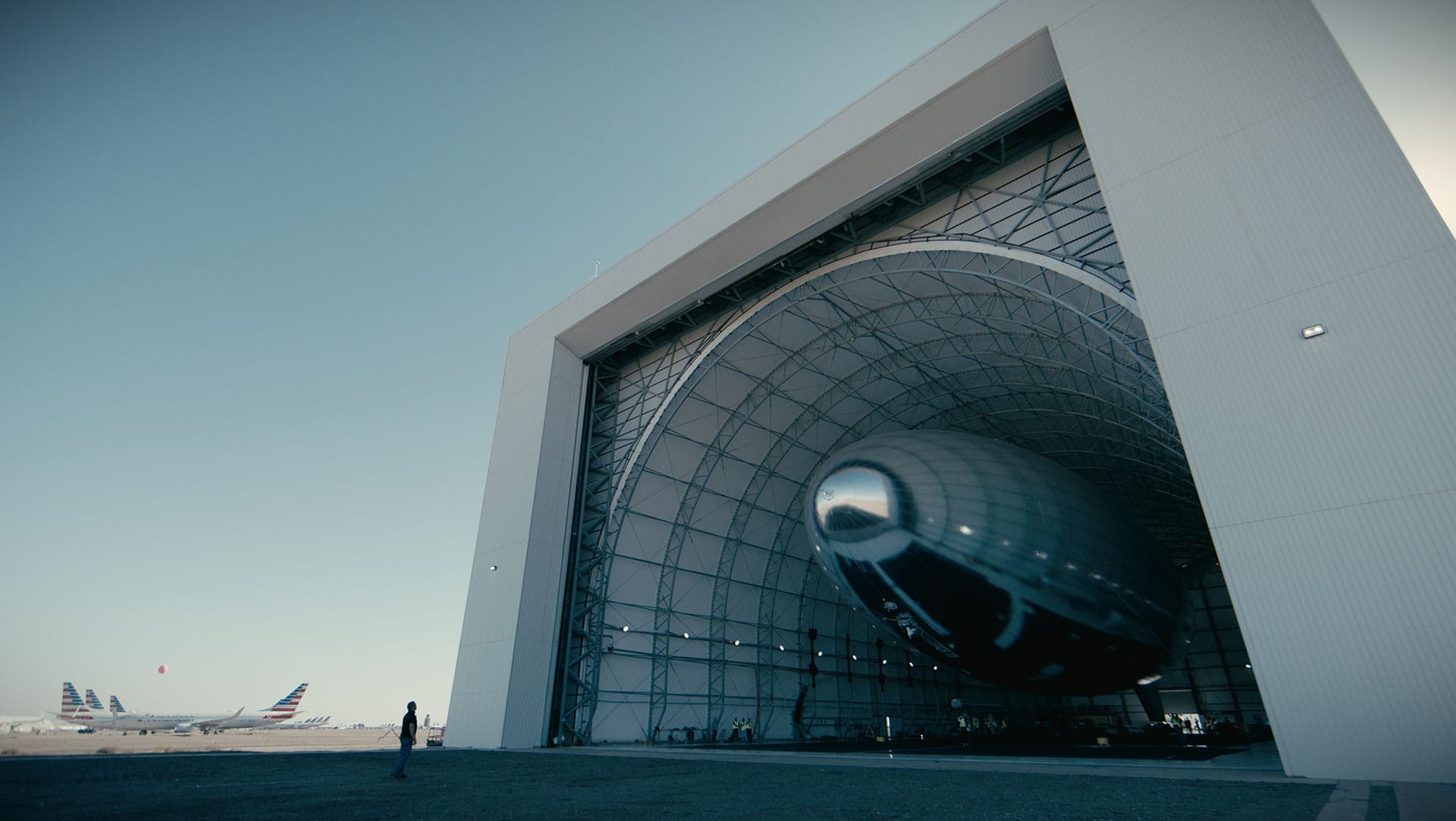
Not every HAPS vehicle can function as being part of a large-scale commercial network. Fixed-wing solar aircraft generally trade payload capacity in exchange for altitude performance, which limits the amount telecommunications equipment they can carry. Sceye's airship design, which is lighter than air, follows different route -- buoyancy bears the weight of the car so that any solar energy is put towards propulsion in station keeping and providing power to onboard systems, rather than simply staying aloft. This design decision gives significant advantages in payload capacity and endurance of missions that matter significantly when trying to maintain continuous coverage in dense areas.
5. The Platform's Multi-Mission Capability Makes the Economy Work
One of the unappreciated benefits of the Sceye method has to do with the fact that each platform doesn't need to justify its operation costs solely through telecoms revenues. The same vehicle that delivers broadband that is stratospheric can also hold sensors for monitoring greenhouse gases, disaster detection, Earth observation, and disaster detection. In a country such as Japan with its high dangers from natural disasters and has national obligations around monitoring emissions, this multi-payload system can make the infrastructure a lot easier to justify at a federal and commercial level. The telecoms antenna as well as the climate sensor aren't in competition -They're sharing a technology that's already available.
6. Beamforming technology and HIBS Technology Enhance the Signal Commercially Usable
Achieving broadband coverage of 20 kilometers isn't simply a matter of placing an antenna downwards. The signal must be tailored, directed and manipulated dynamically to provide users efficiently across the expanse. Beamforming technology allows the stratospheric telecom antenna to direct the signal's energy the areas of greatest demand, instead of broadcasting uniformly without wasting power over empty landscapes, or oceans that are not inhabited. It is paired with the HIBS (High-Altitude IMT Base Station) standards that make the device compatible with existing 4G and 5G device ecosystems, this means regular smartphones are able to connect without special equipment -- a critical necessity for any mass-market deployment.
7. Japan's Island Geography Is an Ideal Test Case for the entire world.
When stratospheric connections are working on a massive scale in Japan this template is an exportable model to every nation which has similar challenges in coverage, which is most nations around the world. Indonesia as well as the Philippines, Canada, Brazil and other Pacific islands all have versions of the same problem geographically dispersed populations that is in opposition to traditional infrastructure economics. Japan's mix of technological sophistication as well as regulatory capability and genuine geographical need creates it as the top possible proving ground for an all-encompassing network built on stratospheric platforms. It is likely that what SoftBank and Sceye illustrate will influence deployments throughout the world for years.
8. The New Mexico Connection Matters More Than It Seems
Sceye operating out of New Mexico isn't incidental. New Mexico offers high-altitude test conditions, an established aerospace infrastructure, and airspace which is ideal for prolonged flight tests that stratospheric vehicle development requires. As one of the most serious aerospace firms that operate in New Mexico, Sceye has developed its program in the context of genuine engineering iteration rather than press release cycles. The gap between announcing a HAPS platform and actually being able to keep it for weeks at an time is huge, however, and Sceye's New Mexico base reflects a company that has been doing the not-so-glamorous job required to bridge that gap.
9. Founder Vision Influenced the Partnership's Long-Term Goals
Mikkel Vestergaard's previous work with a focus on applying technology to humanitarian and environmental problems -- has evidently changed the direction of what Sceye wants to build and why. The collaboration with SoftBank isn't solely a commercial telecoms play. The platform's emphasis the need to identify disasters and monitoring in real-time, and connectivity for those in remote areas represents a core belief that the stratospheric internet should serve wide-ranging social needs alongside commercial ones. That premise has likely made Sceye a better partner for a company such as SoftBank that operates in a strict regulatory and public environment where its corporate mission is a significant factor.
10. 2026 Will be the Year in which of the Stratospheric Tier either proves itself or Resets Expectations
The HAPS sector has been promoting commercial deployment for longer than most observers are able to recall. What is unique about the Sceye and SoftBank timeline significant is that it assigns to a specific nation, a specific operator, and an exact milestone in service to a particular year. When pre-commercial networks in Japan launch on schedule and operate as specified 2026 will mark how the world's connectivity changed from promising technology, to working infrastructure. If it does not, the industry will be forced to ask more challenging questions on whether engineering challenges are as sorted out such as the recent developments suggest. Either way, the partnership has put a mark in the sky that is worth keeping an eye on. See the top Sceye stratospheric platforms for website recommendations including what does haps, sceye haps payload capacity, sceye haps project updates, HAPS technology leader, softbank haps pre-commercial services japan 2026, sceye softbank partnership, investment in future tecnologies, Sceye Softbank, Station keeping, Sustainable aerospace innovation and more.

Natural Disaster And Wildfire Detection From The Stratosphere
1. The Detection Window Is the Most Important Thing You can Extend
Every major catastrophe comes to a point which can be measured in minutes, but sometimes in hours -when early awareness would have changed the outcome. The wildfire that covers a quarter of hectare is a problem of containment. A similar fire is found in the case of fifty hectares is a crisis. An industrial gas leak detected within the first twenty minutes can be controlled before it turns into a public health emergency. The same release discovered within three hours, triggered by either a ground report or satellite flying overhead on its scheduled trip, has changed into a situation that has no solution that is clear. The ability to extend the detection window is likely to be the most beneficial element that improved monitoring infrastructures provide, and the constant observatory of the stratospheric is one the very few ways to alter the window in a meaningful way, rather than just marginally.
2. Wildfires are becoming harder to Monitor Using Existing Infrastructure
The magnitude and frequency of wildfires in recent years has far outpaced the monitoring equipment designed to monitor them. Monitoring networks that rely on sensors in ground- sensors, watchtowers or ranger patrols - take up too little space too slowly to catch fast-moving fires in the early stages. Aircraft responses are effective, but costly, weather dependent and reactive instead of anticipatory. Satellites cross any area according to a frequency measured in hours. This means that a blaze that ignites it, spreads, or crowns between passes provides no warning whatsoever. The combination of bigger fires and faster rates of spread driven durch droughts, and complex terrain creates a monitoring gap that traditional approaches cannot close structurally.
3. Stratospheric Altitude Provides Persistent Wide-Area Visibility
A platform operating at 20 kilometres above the surface is able to maintain a continuous view throughout a land area that is several hundred kilometers covering regions prone to fires, coastlines forests, forest margins and urban interfaces simultaneously and without interruption. In contrast to aircrafts, it doesn't have to go back for fuel. In contrast to satellites it doesn't disappear into the horizon during a revisit cycle. In the case of wildfire detection, this kind of continuous visibility across the entire area means that the device is monitoring whenever fire starts, monitoring when the initial spread takes place, and looking out for changes in fire behavior in a continuous stream of data rather than a sequence of snapshots which emergency managers have to interpolate between.
4. Thermal and Multispectral Sensors May Detect Fires before smoke becomes visible.
Some of the most useful technology for detection of wildfires does not wait to see visible signs of smoke. Thermal infrared sensors recognize heat patterns that can be interpreted as evidence of ignition even before the fire has left any visible evidence -- by identifying hotspots inside dry vegetation, glowing ground fires under forest canopy, and the initial warmth signature of fires starting to form. Multispectral imaging can be further enhanced by detecting changes in vegetation state -- moisture stress burning, drying, browningindicators of increased threat of fire in a particular area before any ignition events occur. A stratospheric system that incorporates this combination of sensors provides immediate warning of active combustion and a prescriptive insight on where the next fire will occur. This differs in the qualitative quality of situational awareness than conventional monitoring provides.
5. Sceye's Multi-Payload Strategy Combines Detection With Communications
One of the real-world complications during major catastrophes is the infrastructure people depend on for communication including mobile towers internet connectivity, power lines -- is usually one of the first elements to be destroyed or flooded. A stratospheric platform that carries both sensor for disaster detection as well as a communication payloads solve this issue by using a single vehicle. Sceye's design approach to mission planning takes connectivity and observation as distinct functions, not competing one, so the same platform that detects a burning wildfire could also provide emergency communications to the responders in the field whose land networks have gone dark. The satellite tower doesn't just watch the destruction but it also keeps people in touch via it.
6. It's a lot more than Wildfires
Wildfires may be one of the most compelling use cases for continuous monitoring of the stratosphere, the same capabilities can be applied to a wider range of scenarios for disaster. Floods can be monitored as they progress across the coastal zones and river systems. Earthquake aftermaths - with compromised infrastructure, blocked roads as well as displaced people- benefit from rapid wide-area assessment that ground-based teams cannot offer in a timely manner. Industrial accidents releasing harmful gasses or oil pollution in coastal waters produce signs easily detectable by the appropriate sensors from stratospheric altitude. Being able to detect climate catastrophes in actual time across all of these categories requires a surveillance system that is always on in constant observation and capable of distinguishing between normal variations in the environment as well as the signs of evolving emergency situations.
7. Japan's unique disaster history makes the Sceye Partnership Particularly Relevant
Japan experiences a disproportionate share of the world's seismic disasters, has regular Typhoon season that impacts zones along the coast and has a history of industrial incidents that require quick environmental monitoring. The HAPS collaboration of Sceye and SoftBank and SoftBank, which focuses on Japan's national system and its pre-commercial service in 2026, is situated at the crossroads of high-speed connectivity to the stratosphere and monitoring capabilities. A nation with Japan's disaster exposure and technological sophistication could be the ideal early adopter of stratospheric infrastructure that blends high coverage capacity with real-time data as well as the essential communications platform that can be relied upon for disaster relief as well as the monitoring layer required by early warning systems.
8. Natural Resource Management Benefits From the same Monitoring Architecture
The sensors and the persistence capabilities which make stratospheric platforms useful for detecting wildfires and other disasters have direct applications in natural resource management that operate over longer timescales, yet require similar monitoring continuity. Monitoring of forest health -- tracking spread of diseases or illegal logging, or vegetation change -- gains from the ability to monitor for slow-developing threats before they are acute. Monitoring of water resources across vast catchment areas, coastal erosion tracking, and the surveillance of protected areas against encroachment all represent applications where the constant monitoring of a stratospheric system can provide actionable data that trips to the satellite or expensive plane surveys cannot replace cost-effectively.
9. The Mission of the Founders Shapes Why Emergency Detection is a Must
Understanding why Sceye is so focused on monitoring of environmental hazards and the detection of disasters as opposed to treating connectivity as a primary goal and observation as a secondary benefit -involves understanding the fundamental focus that Mikkel Vestergaard has brought to the company. Experience in applying cutting-edge technology to tackle large-scale humanitarian challenges is a different set goals than a commercial telecommunications approach would. This capability for detecting disasters cannot be retrofitted into a platform for connectivity as a value-added service. It's a result of a belief in the fact that stratospheric infrastructure should be actively useful for the kinds of challenges -- climate emergencies, environmental disasters emergencies involving human life, where the earlier and more precise information transforms outcomes for the populations that are affected.
10. Persistent Monitoring Can Change the Relationship Between Data and Decision
The bigger shift that stratospheric detection of disasters enables isn't simply a quicker response to individual events -- it's a change in the way decision-makers think about environmental risks across time. If monitoring is not continuous, resources deployment decisions, evacuation planning, as well as infrastructure investment must be made with a lot of uncertainty regarding present conditions. If monitoring is constant the uncertainty is reduced dramatically. Emergency managers using the ability to monitor in real-time from a continuous stratospheric platform that is above their respective area of responsibility are making decisions from a distinct position of information compared to people who rely on scheduled satellite passes and ground reports. This shift from regular snapshots to constant conditional awareness is what makes stratospheric satellite earth observation from platforms like those developed by Sceye truly transformative, rather than more incrementally valuable. Take a look at the best 5G backhaul solutions for blog info including sceye disaster detection, Cell tower in the sky, softbank sceye partnership haps, aerospace companies in new mexico, space- high altitude balloon stratospheric balloon haps, sceye haps softbank partnership, Stratospheric broadband, Beamforming in telecommunications, stratospheric internet rollout begins offering coverage to remote regions, sceye haps status 2025 2026 and more.